
Nowadays, the world is moving forward so rapidly that stress has become an integral part of life. Whether it’s work pressure, personal challenges, or daily responsibilities, chronic stress can take a toll on both mental and physical health. Fortunately, yoga for stress release offers a natural and effective way to restore balance, calm the mind, and rejuvenate the body.
This comprehensive guide explores how to reduce stress naturally, the best poses for relaxation, breathing techniques, and tips to incorporate yoga into your daily routine.
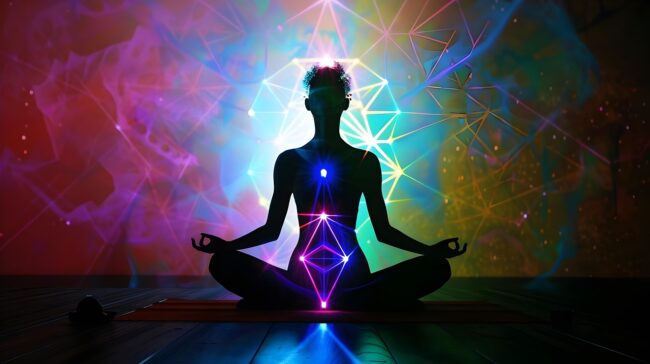
The Proven Science Behind Using Yoga for Stress Release
Numerous studies confirm that regular yoga practice significantly reduces cortisol levels (the primary stress hormone) while increasing feel-good neurotransmitters like serotonin and GABA. Unlike high-intensity workouts that can sometimes add physical stress, yoga works by:
- Activating the parasympathetic nervous system (triggering relaxation).
- Lowering blood pressure and heart rate.
- Eases tight back, neck, and shoulder muscles.
- Improving sleep quality.
- Enhancing emotional resilience.
Yoga is beneficial for long-term stress management because it combines mindful movement, conscious breathing, and meditation.
10 Calming Yoga Poses to Melt Away Stress and Anxiety
From complete restorative surrender to gentle tension-releasing movement, these thoughtfully curated poses form a holistic toolkit for stress relief. Each posture serves as a sanctuary where tight muscles unwind, racing thoughts subside, and your entire system returns to its natural state of calm. The sequence meets you where you are – whether you need passive relaxation to decompress or mindful movement to release pent-up energy – guiding both body and mind toward peaceful equilibrium.
Restorative Yoga for Stress Release: Poses for Deep Relaxation
- Child’s Pose (Balasana):-
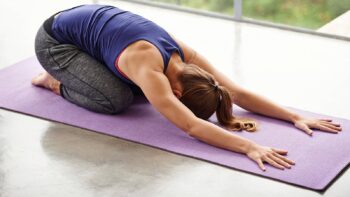
The ultimate resting pose for instant relaxation.
- Kneel on the floor with big toes touching.
- Sit back onto your heels and fold forward.
- Let your arms relax completely.
- Hold for 1-3 minutes with deep breathing.
Benefits: Relieves tension in key stress-holding areas (back, shoulders, neck).
- Legs-Up-the-Wall Pose (Viparita Karani):-
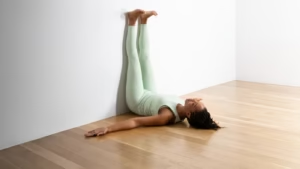
A passive inversion for deep relaxation.
- Lean against a wall and raise your legs.
- Lie back with arms by your sides
- Close your eyes and breathe deeply
- Stay for 5-10 minutes
Benefits: Relieves anxiety, reduces swelling in legs, promotes better sleep.
- Reclining Butterfly Pose (Supta Baddha Konasana):-
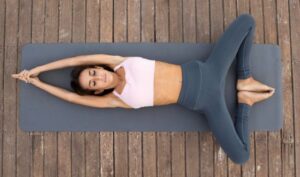
A restorative hip opener.
- Create a butterfly shape with your legs: lie down, touch your soles together, and let your knees relax sideways.
- Rest your palms gently on your belly or extend your arms out in a T-shape, palms facing up.
- Stay for 2-5 minutes.
Benefits: Releases hip tension, improves circulation, reduces fatigue.
- Corpse Pose (Savasana):-
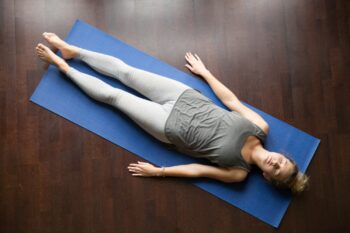
The essential final relaxation.
- Lie flat on your back, arms at the sides.
- Close your eyes, and relax your entire body.
- Focus on the natural breath.
- Stay for 5-10 minutes.
Benefits: Lowers blood pressure, reduces cortisol, integrates benefits of practice.
Gentle Active Poses to Release Tension
- Seated Forward Bend (Paschimottanasana):-
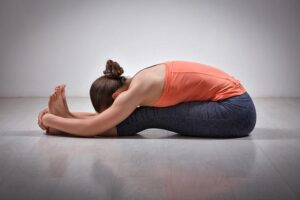
A soothing stretch for the entire back body.
- Sit with legs extended straight.
- Inhale to lengthen the spine.
- Exhale to fold forward.
- Hold for 30 seconds – 1 minute.
Benefits: Calm the brain, stretches the spine, and relieves mild anxiety.
- Cat-Cow Stretch (Marjaryasana-Bitilasana):-
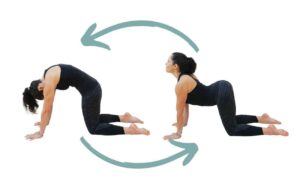
A gentle spinal flow to release tension.
- Come to all fours like a sturdy table – palms flat beneath shoulders, knees below hips, back as flat as a tabletop.
- Inhale: Arch back, lift head (Cow Pose).
- Exhale: Round spine, tuck chin (Cat Pose).
- Flow for 1-2 minutes.
Benefits: Eases back pain, improves spinal mobility, synchronizes breath.
- Bridge Pose (Setu Bandhasana):-
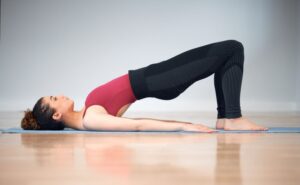
A gentle backbend to lift your mood.
- Lie on your back with your knees bent.
- Press feet down to lift hips.
- Clasp hands under the back if possible.
- Hold for 30 seconds – 1 minute.
Benefits: Opens chest, relieves stress, stretches spine.
- Supine Spinal Twist (Supta Matsyendrasana):-
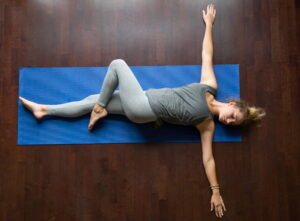
A relaxing twist to release tension.
- Lie on back, hug right knee to chest.
- Guide knee across body to the left.
- Extend right arm, gaze right.
- Hold 30 seconds on each side.
Benefits: Relieves back tension, improves digestion, calms nervous system.
- Standing Half Forward Fold (Ardha Uttanasana):-
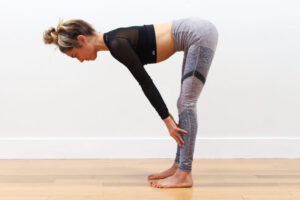
A less intense version of forward fold.
- From standing, fold halfway down.
- Place hands on shins or blocks.
- Keep back flat, and lengthen the spine.
- Hold for 30 seconds.
Benefits: Stretches hamstrings gently, and relieves fatigue.
- Standing Forward Bend (Uttanasana):-
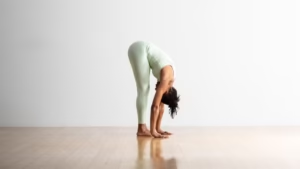
A calming forward fold to quiet the mind.
- Stand tall, exhale, and fold from hips.
- Let the head hang heavy.
- Bend knees slightly if needed.
- Hold for 30 seconds – 1 minute.
Benefits: Relieves headaches, stretches hamstrings, reduces fatigue.
5 Breathing Techniques to Calm Your Nervous System
The powerful combination of pranayama and yoga for stress release helps calm your nervous system on a deeper level.
- Diaphragmatic Breathing (Belly Breathing):-
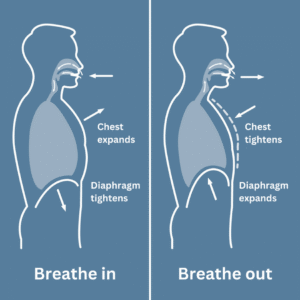
The foundation of relaxation.
- Place your hand on the belly.
- Inhale deeply through the nose, expanding belly.
- Exhale slowly through pursed lips.
- Continue for 2-5 minutes.
Benefits: Activates relaxation response, and lowers heart rate.
- 4-7-8 Breathing:-
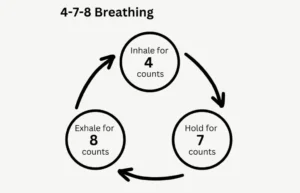
A scientifically-backed calming technique.
- Inhale for 4 counts.
- Hold for 7 counts.
- Exhale for 8 counts.
- Repeat 4-5 cycles.
Benefits: Quickly reduces anxiety, and promotes sleep.
- Alternate Nostril Breathing (Nadi Shodhana):-
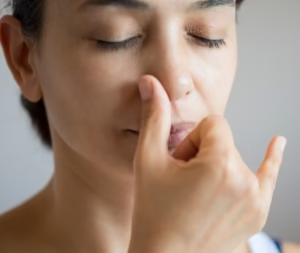
Balances both hemispheres of the brain.
- Close right nostril, inhale left.
- Close left nostril, exhale right.
- Inhale right, close, exhale left.
- Continue for 5-10 rounds.
Benefits: Reduces stress, improves focus, balances energy.
- Ocean Breath (Ujjayi Pranayama):-
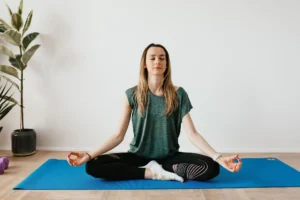
Creates a soothing rhythm.
- Constrict the back of the throat slightly.
- Inhale and exhale through the nose.
- Create a soft “ocean wave” sound.
- Continue for 1-3 minutes.
Benefits: Calms the mind, and builds heat in the body.
- Humming Bee Breath (Bhramari Pranayama):-
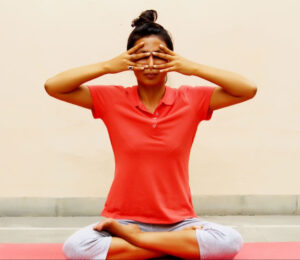
Instant stress reliever.
- Close ears with fingers.
- Inhale deeply.
- Exhale with a humming sound.
- Repeat 5-7 times.
Benefits: Relieves tension, and reduces anger and anxiety.
Developing a Maintainable Yoga for Stress Release Routine
- Start Small – Even 10 minutes daily makes a difference.
- Morning or Evening? – AM for energy, PM for relaxation.
- Design a sensory sanctuary—soft lighting, lavender oil, and nature sounds deepen relaxation.
- Combine with journaling – Record stressors and progress.
- Try Different Styles – Restorative, Yin, or gentle Hatha work best.
Transforming Stress Into Serenity: A Path Forward
Yoga provides a comprehensive toolkit for managing modern stress, combining physical postures, conscious breathing, and mindfulness. By practicing these 10 yoga poses and 5 breathing techniques regularly, you can build resilience against daily pressures and cultivate lasting inner peace.
Remember: Consistency matters more than duration. Even short, frequent sessions of yoga for stress release can create profound changes in your well-being.
“True relaxation begins when you choose to meet yourself with patience. Keep returning to the mat, and let calm become your compass. Begin today, and let the journey to calm unfold.” Want to optimize your overall wellness?👉Sunshine Vitamin D
🪄For more health optimization tips:
- Follow us on Instagram for daily wellness hacks.
- Join our Facebook community of health-conscious readers.
- Pin your favorite health tips on Pinterest.